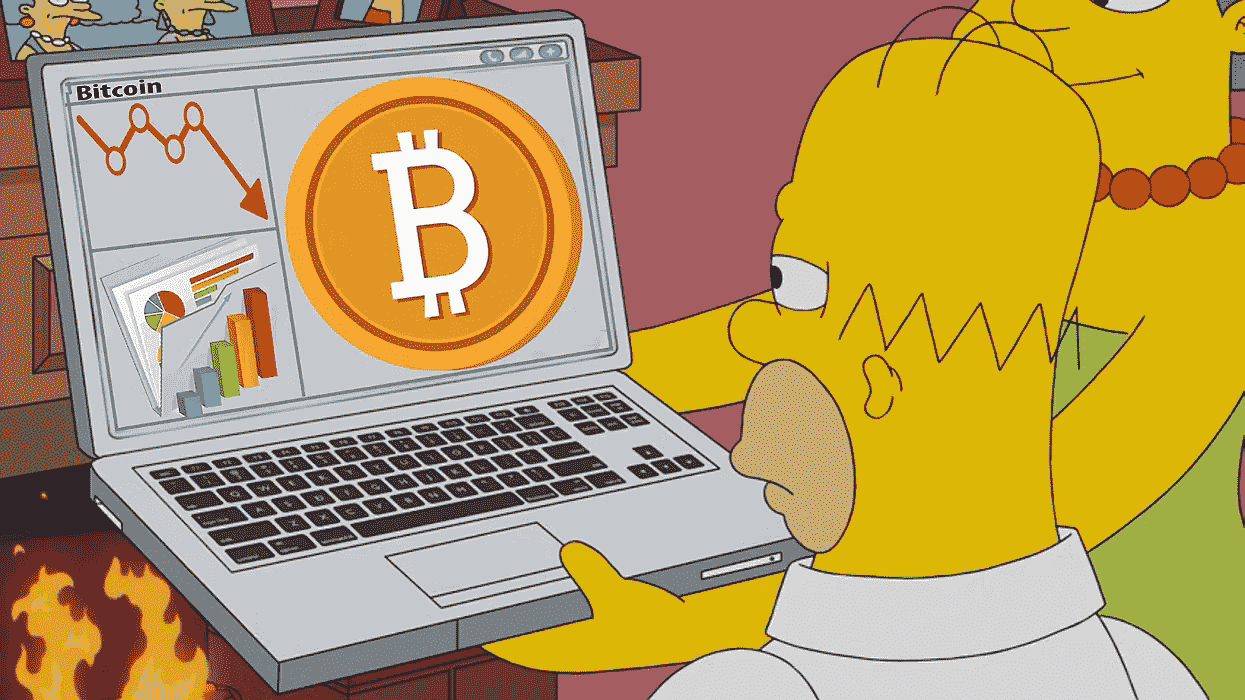
I work as a crypto derivatives trader, spending long hours tracking sentiment across meme coins, social media chatter, and fast-moving futures charts. Over the years, I started noticing how often people bring up The Simpsons whenever a strange crypto movement happens. It usually comes up after the fact, when a price spike or crash already looks “predictable” in hindsight. That connection between entertainment and market behavior is what drew me to study it more seriously.
The Simpsons and hindsight trading narratives
I first started hearing about Simpsons crypto predictions during a volatile week when a low-cap token jumped unexpectedly, and forums immediately tied it to an old cartoon clip. I was sitting at a small trading desk with three monitors, watching liquidation levels stack up as usual. A colleague mentioned, “The Simpsons did it again,” and that stuck with me because it was said half-jokingly, half-seriously.
In my experience, traders often look for patterns that confirm what has already happened rather than what is likely to happen next. I have seen this repeatedly after sharp Bitcoin moves where people retroactively match a chart pattern to an old scene from the show. It feels satisfying to connect dots, but markets rarely reward that kind of backward reasoning. One quiet Sunday evening, I even replayed a few clips myself just to understand why people trust them so much.
A lot of this comes down to how humans handle uncertainty in fast markets. When a sudden pump wipes out several thousand dollars in positions, traders naturally look for meaning beyond pure data. The Simpsons becomes a cultural reference point because it is widely known and easy to interpret. That familiarity makes it feel more credible than it actually is in a trading context.
I now treat these narratives as sentiment indicators rather than signals. They show retail traders’ emotional reactions, not market direction. I learned this after early career risks, so I see memes as noise patterns, not forecasts.
Crypto culture, prediction hype, and information loops
While working through different trading cycles, I realized how crypto communities amplify prediction stories because they travel fast and feel entertaining. I often browse sentiment threads while running position checks, and The Simpsons references appear more often during uncertain market phases. One evening, during a high-volatility session, I noticed at least five posts linking a new token surge to an old cartoon frame, even though the connection was extremely tenuous.
For traders who want structured analysis tools alongside sentiment tracking, I sometimes point them toward Simpsons Crypto Prediction as a way to organize research instead of relying on fragmented social signals. I use similar resources when I need to separate structured data from narrative noise during busy trading sessions. It helps me stay grounded when social media starts pushing exaggerated interpretations of price movements. I have seen too many cases where hype moved faster than logic.
These prediction stories create loops: someone posts a clip, it gets shared, a price move gets tied to it, and suddenly the show is seen as predicting the market. I’ve watched this cycle repeat during altcoin rallies, creating an illusion of foresight driven by coincidence and timing.
In one case last spring, I tracked a meme token that doubled within hours after a viral post connected it to a Simpsons episode. When I dug deeper, the episode lacked meaningful financial context, just a visual similarity that people loosely interpreted. The trading volume dried up just as quickly as it appeared, leaving late entrants stuck with losses. That pattern showed me how fragile these narratives really are.
Pattern recognition errors in trading psychology
My daily work involves watching charts that rarely behave in clean, predictable ways. Because of that, I understand why traders try to impose structure where none exists. The human brain prefers stories over randomness, and The Simpsons’ predictions fit neatly into that tendency. I have made similar mistakes myself when I first started trading crypto futures.
There were moments when I believed I was seeing “signals” in places that were just noise. A sudden wick on a 5-minute chart once convinced me that a reversal was forming, and I entered a position that reversed against me within minutes. That loss was not large, but it taught me something important about overfitting, meaning the random movement. I still remember that trade clearly, even though it happened years ago.
Crypto markets worsen these tendencies because they react to liquidity shifts. With high leverage, small triggers cause large price swings. Traders reach for intuitive explanations, often turning to familiar references like The Simpsons. Belief in prediction feels better than accepting randomness.
I have also noticed that people who rely heavily on narrative-based signals tend to enter trades later than they should. By the time the story spreads, the real move has already happened. That delay turns supposed predictions into exit liquidity for more disciplined participants. I learned to respect timing more than storytelling after enough missed opportunities and avoidable losses.
Now, I view the Simpsons’ crypto prediction talk as entertainment layered on top of real market behavior. It helps me read crowd behavior, but doesn’t guide my trades. That distinction keeps my decisions mechanical and less emotional in volatile times.
I still see others connecting dots that don’t align with the price structure. I don’t dismiss sentiment outright, but I don’t use these connections for direction. Balancing awareness with detachment has served me better than any prediction theory.
In the end, trading crypto feels less like decoding hidden messages and more like managing reactions to uncertainty. The Simpsons will probably keep being mentioned every time something unusual happens in the market. I just no longer confuse that pattern of discussion with a predictive edge.