I’ve spent years working around premium sports and event spaces, consulting on guest flow, seating upgrades, and service operations for high-traffic venues. The Lexus Club Crypto Arena is a place I’ve walked through countless times, whether during quiet prep days or right before a packed game night. I notice how the experience shifts depending on timing, crowd type, and operational decisions that most guests never notice.
First impressions from inside the Lexus Club
The first time I stepped into the Lexus Club area at Crypto Arena, I was helping evaluate a seating upgrade project that affected about 300 premium guests. I remember thinking how controlled everything felt compared to the general bowl seating, from lighting levels to the spacing between service points. Even the staff movement patterns were tighter, almost rehearsed, which is not something you see in every venue of this size.
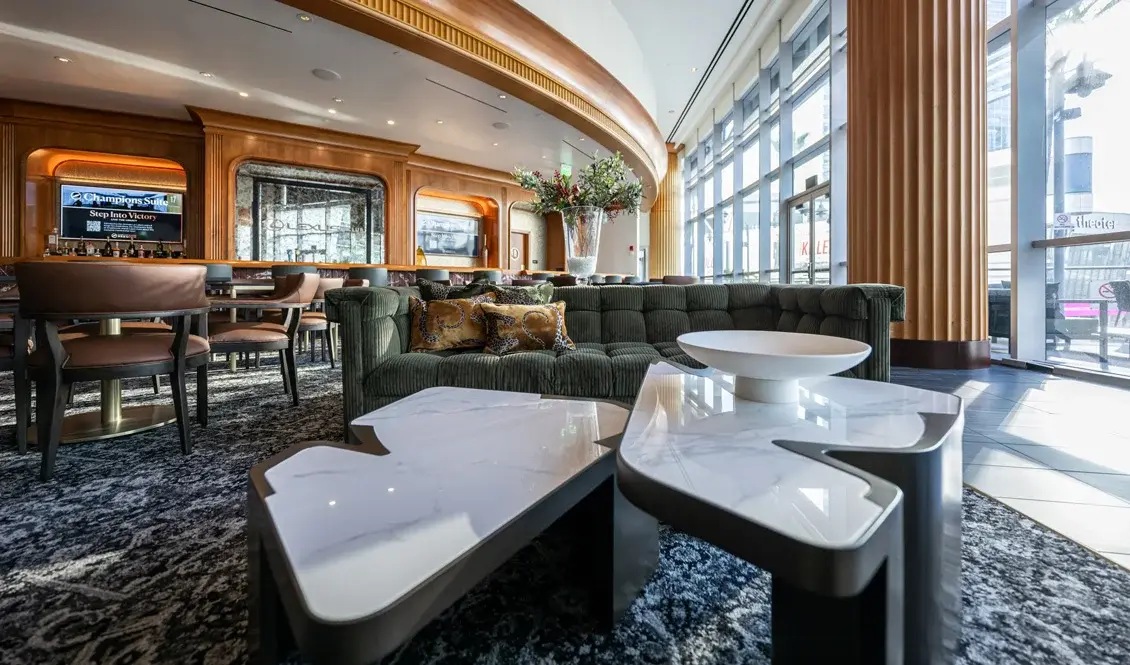
I’ve seen similar premium sections in other arenas across different cities, but this one tends to balance exclusivity with access in a way that is not always easy to maintain. A customer last spring, whom I was advising on hospitality design, asked me why some clubs feel cold while others feel inviting, and I pointed to small sensory decisions, like flooring texture and sound-dampening. In this space, I noticed how the designers avoided overcomplicating things, keeping sightlines open while still maintaining separation from general traffic areas.
On busy nights, especially when attendance approaches the high tens of thousands, the flow into the Lexus Club becomes a real operational challenge. I’ve watched staff adjust entry pacing in real time to prevent bottlenecks, and it usually comes down to how early guests arrive rather than any structural issue. There was one evening when a delayed entry wave created a short backup near the elevators, and the team smoothed it out in less than 10 minutes, with most guests not even noticing the correction.
Service structure and guest experience inside the club
What I’ve consistently noticed is that the service model inside the Lexus Club Crypto Arena relies heavily on timing precision rather than sheer staff volume. I’ve walked through both the pre-game rush and the mid-event calm periods, and the contrast between the two tells you everything about how tightly the system is managed. One sentence I often repeat to clients is that luxury spaces are less about what you add and more about what you prevent from going wrong.
During one consulting visit, I worked alongside a hospitality group that was reviewing premium seating performance metrics for a seasonal contract worth several thousand dollars in service upgrades. We compared guest dwell time, concession speed, and seating turnover patterns to understand how the club experience influenced overall satisfaction. That discussion eventually led us to adjust staffing rotations so that peak ordering windows were covered more evenly, especially during halftime surges where demand spikes within minutes.
It was during that same project that I recommended they observe how guests interact with seating zones rather than just focusing on food or drink service. The Lexus Club Crypto Arena environment actually rewards subtle behavioral tracking, such as how often guests leave their seats between periods or how long they stay in lounge areas rather than returning to the main seating. I still think many venues underestimate how much these micro-patterns influence revenue flow and staff efficiency.
A service rhythm develops over time, almost like a quiet choreography between attendants and guests. Long-term staff often anticipate regular attendees’ order patterns without speaking. This familiarity, built through repeated interactions, is a key asset for consistent premium club service.
Design flow, access, and operational details
Access design inside the Lexus Club Crypto Arena is one of the more interesting parts of the venue from my perspective, especially because it sits at the intersection of security, comfort, and visibility. I’ve worked on similar access layouts where the challenge was keeping premium guests separated without making them feel isolated, and that balance is harder than it looks on paper. The entry points here tend to distribute traffic so that no single corridor is under pressure, which helps during high-volume arrivals.
In one review cycle I participated in, we tested entry timing simulations across different crowd arrival scenarios, and the results showed that even a 5-minute shift in arrival distribution could significantly change congestion patterns. The Lexus Club Crypto Arena handled these variations better than expected, partly because the transition zones are wide enough to absorb short bursts of traffic without immediate slowdown. It reminded me of a project I worked on where poor corridor planning caused repeated delays, costing the venue operational efficiency over an entire season.
There is a subtle detail I’ve always appreciated in this kind of design work: how sightlines remain consistent even as you move between transitional areas. Guests never feel fully disconnected from the main event energy, even when they are ordering food or stepping into lounge seating. That continuity matters more than most people realize because it keeps emotional engagement high, which in turn affects how long guests stay in premium zones.
From a maintenance standpoint, I’ve also noticed that high-touch surfaces and traffic edges in this club are managed with a predictable routine rather than reactive cleaning. I once spoke with a staff supervisor who explained that they plan rotations around event phases instead of fixed hourly schedules, which allows them to respond to actual usage patterns. That kind of adaptive structure is one of the reasons the space feels consistently well-kept even during back-to-back event nights.
My experience with the Lexus Club Crypto Arena shows that premium venue success depends on the precise orchestration of small, invisible operational and design choices—all of which are shaped to deliver seamless, memorable guest experiences amid pressure and scale.
Leave a Reply